
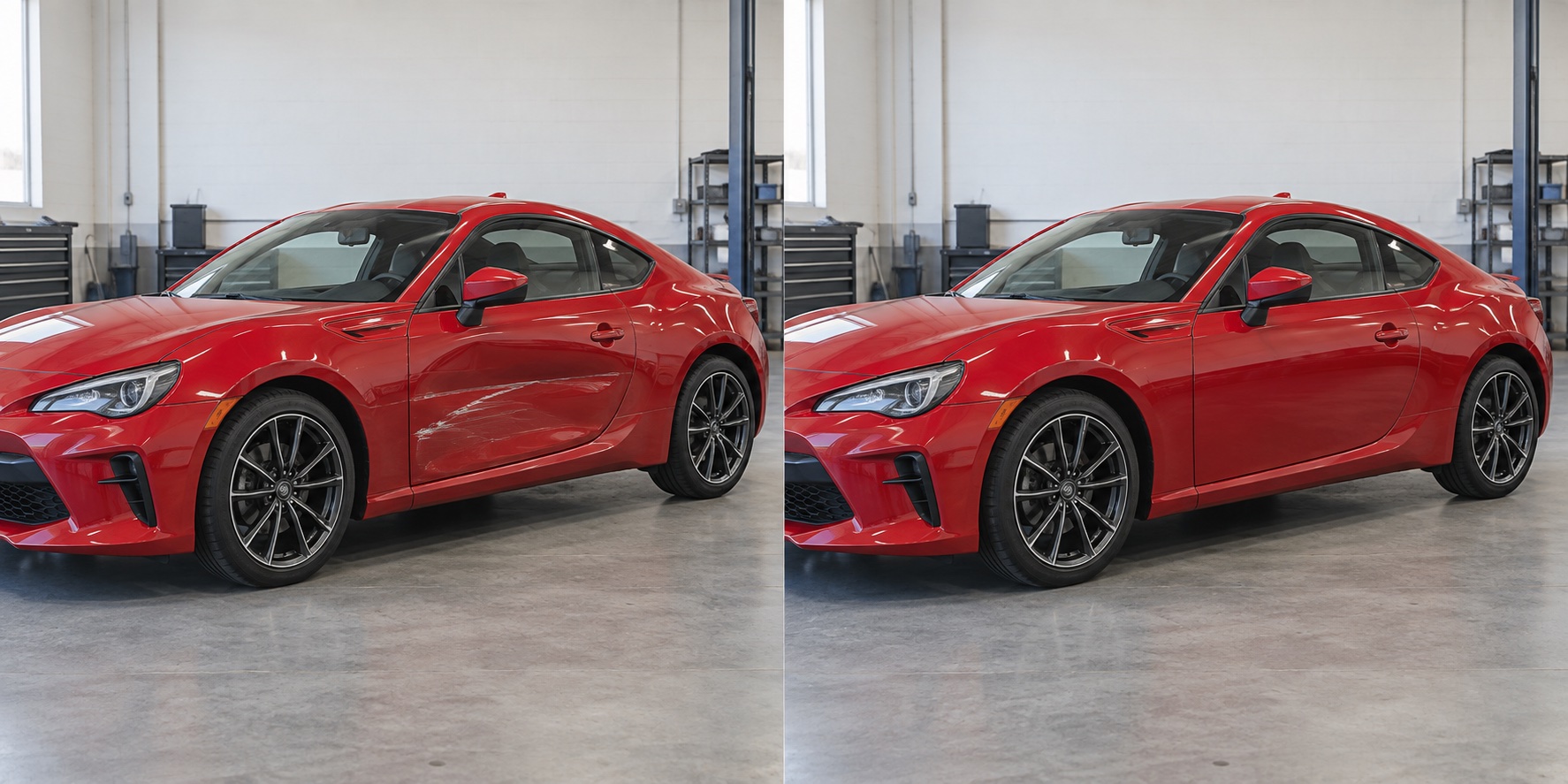
About this walkthrough
This example repair scenario is a planning guide, not a real customer story or a guarantee of an outcome. Use it to prepare questions for your own assessment.
Before: the information available
Imagine a long mark across a door with areas that look different under changing light. The owner has not applied abrasive products and can describe the contact that caused it. A phone image alone does not show the depth of every part of the mark.
The assessment and decision
The evaluator would distinguish transferred material, surface defects, and deeper coating damage. The conversation could compare a limited correction with refinishing, making expected improvement and remaining marks explicit. The scope would avoid promising that every scratch can be removed by polishing.
After: what the record should explain
The final review would use the authorized treatment as the reference, followed by care guidance for the completed work. An appearance treatment would not be described as a full repaint unless that was actually performed.
Apply the questions to your vehicle
Every vehicle and damage pattern needs its own assessment. Use this sequence to organize observations and ask clear questions about scope, capability, authorization, and documentation. Bring your vehicle details, wide and close-up damage photos, and any earlier repair records that could help explain the condition. Contact the shop to confirm the appropriate appointment and the specific work it can accept.
Let’s talk about your vehicle.
Every repair starts with the details. Tell us what happened, and contact the shop to confirm the right next step for your vehicle.
Request an estimate